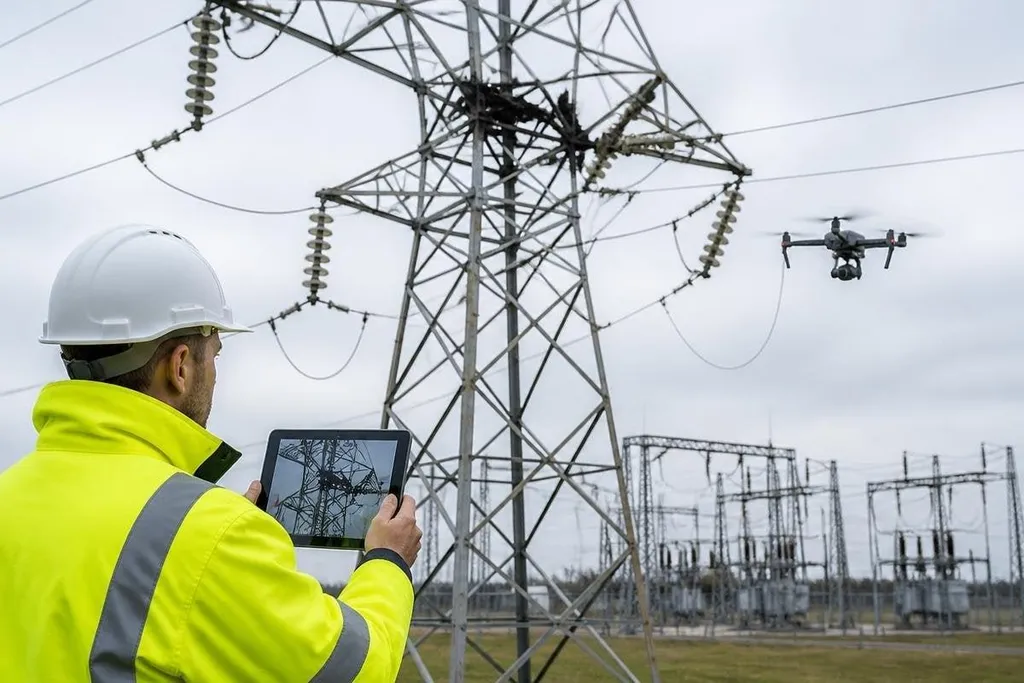
A damaged power line, substation, or wind turbine can put a crew in danger before anyone knows the fault is there. Robots can inspect these assets from the ground, air, or water and send images and sensor data to people who decide what needs repair.
Quick read
- Drones can scan lines and towers from the air.
- Ground robots can inspect substations without sending a worker into every area.
- The hard part is turning robot data into a repair plan.
Where energy robots fit
Grid maintenance covers a large physical area. Transmission lines cross fields, forests, and steep ground, while substations contain live electrical equipment that can remain dangerous after a fault.
A drone can follow a planned route beside a line and record visible damage. Its camera may spot a broken insulator, a loose part, or vegetation close to the wires. A thermal camera can also show hot areas that need a closer check, though the image still needs a trained person to judge the cause.
Ground robots fit places where flying is hard or unsafe. A wheeled or tracked robot can move through a substation, record equipment, and send video over a radio link. The robot keeps a person away from some hazards, but it doesn't remove the need for site rules, isolation, or an emergency stop.
Underwater robots work around energy assets that people can't inspect easily. A remotely operated vehicle can carry cameras and other sensors along submerged cables, dams, or offshore structures. It stays connected to an operator, so the person can guide the inspection when the route changes.
What the robot changes for a maintenance crew
The first gain comes before repair. A crew can review images and sensor readings before driving to a site, then bring the parts and tools that match the fault. That can reduce repeat visits when the inspection data is clear enough to support a repair decision.
The second gain is access. A drone can inspect a tower without a worker climbing it, while a ground robot can enter an area after a fault has made access uncertain. These machines still need a safe operating zone, a trained operator, and a plan for signal loss.
The data also gives the grid owner a record of asset condition. Comparing images from repeated routes can show that a crack, hot connector, or damaged coating has changed.
That record helps a team rank work by risk and condition instead of waiting for a visible failure.
An inspection result matters to a utility team only when it names the robot, asset, test date, and measured fault. Robot24.com energy robotics coverage ties those details to work on lines and substations before the next section looks at the field limits that can stop a planned inspection.
The limits are practical
A robot's camera doesn't understand a repair by itself. It can collect a clear image, but a person may still need to identify the fault, confirm that the asset is safe to approach, and approve the work.
Weather can reduce the value of an inspection. Wind moves a drone near a line, rain affects cameras, and poor visibility can hide damage. Radio links can also weaken around large structures or remote sites, so the operating plan needs a safe response when contact drops.
Battery life sets another limit. A short flight may cover one tower or a small section of line, then the drone needs a battery change or a return to its launch point. A ground robot faces the same problem on rough ground, slopes, or long routes.
Data quality matters as much as robot movement. A useful system records the asset location, time, camera angle, and sensor result in a form that maintenance software can read. If a worker has to sort hundreds of unmarked images by hand, the inspection may add work instead of removing it.
I'd start with one repeatable inspection route and a clear repair decision, not a broad robot purchase.
A practical buying checklist
Before a utility or energy operator starts a pilot, check these points:
- Name the asset: Choose one line section, substation zone, cable route, or turbine area.
- Set the decision: Define the fault that should trigger a repair visit.
- Check access: Test flight rules, ground conditions, radio coverage, and recovery space.
- Measure the record: Require location, time, image quality, and sensor data for each finding.
- Plan the handoff: State who reviews the data and who approves work.
- Test the failure case: Cut the signal or reduce visibility during a controlled trial.
The pilot should produce more than a folder of videos. It should show how many assets the robot inspected, how many findings a person confirmed, and how many site visits the process changed.
That is the measure that matters for grid maintenance: not how well a robot moves in a demo, but whether its data helps a crew make a safer repair decision before reaching the site.